California Injury PLC | Trusted Personal Injury Lawyer in LA

An Informational, Step-by-Step Safety & Awareness Guide
Important Notice
This guide is provided for general informational and educational purposes only. It does not provide legal advice, It does not create an attorney-client relationship, and should not be relied upon as a substitute for professional legal or medical guidance. Laws, procedures, and requirements may vary depending on individual circumstances.
Being involved in a vehicle collision can be confusing, stressful, and emotionally draining. In the moments and days that follow, people often feel unsure about what steps may be helpful to consider. This guide offers general information commonly shared with drivers in California to help them understand typical post-accident considerations related to safety, documentation, and awareness.
Stay at the Scene & Ensure Safety
Immediately after a collision, personal safety is the top priority.
General safety considerations may include:
• Turning on hazard lights
• Checking yourself and others for visible injuries
• Moving to a safer location if it can be done without risk
• Remaining calm and aware of traffic conditions
Call 911 — Law Enforcement & Emergency Services
Dial 911 immediately if anyone is injured, if there’s substantial damage, or if someone on the scene requests it. Having law enforcement respond helps create an official police report, which is crucial for insurance claims and legal purposes in California. A police or California Highway Patrol (CHP) report documents:
- The people and vehicles involved
- Weather and road conditions
- Statements given at the scene
- Any preliminary findings about fault
Even if injuries seem minor, always call for law enforcement. Some injuries (e.g., concussions or internal bleeding) may not show symptoms immediately but can be serious
Seek Immediate Medical Attention
Even if you feel okay, get checked by a medical professional right away. Many injuries — like whiplash, soft-tissue trauma, or internal injuries, may not be obvious until later. Prompt medical evaluation:
- Protects your health
- Provides documentation linking injuries to the crash
This documentation is critical for insurance claims and personal injury lawsuits.
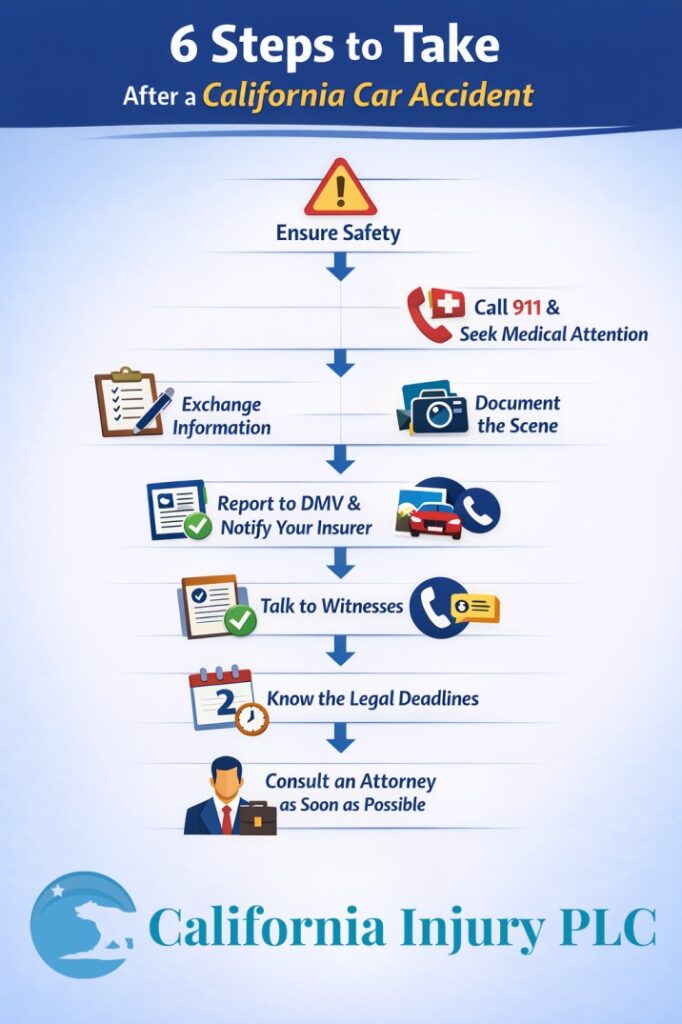
Exchange Information with Other Drivers
California law requires drivers involved in an accident to exchange specific information. At the scene, be sure to provide and collect:
- Full names & addresses
- Driver’s license numbers
- License plate numbers
- Insurance company and policy numbers
- Vehicle make/model and VIN (Vehicle Identification Number) if available
Information Exchange
In many traffic incidents, drivers exchange basic information at the scene. This commonly includes:
- Names and contact details
- Vehicle information
- Insurance details
- Keeping information factual and neutral is often recommended in stressful situations. Photos of vehicle damage from multiple angles
- The road conditions, signs, signals, noise/lighting factors
- Skid marks, debris, and environmental factors
- Photos of your injuries
- Video walkthroughs of the scene
- Witness statements and contact info
Clear visual documentation strengthens your claim later with insurers or in court
Report to the DMV if Required and Notify Your Insurance Company Promptly
If your accident involves injury, death, or over $1,000 in property damage, California law requires you to file a DMV SR-1 form within 7 days. Even when a police officer handled the scene, the DMV report safeguards your legal record and insurance process. You must inform your own insurer about the accident — doing so quickly helps ensure your claim is processed correctly. However, do not admit fault. Simply provide the factual basics:
- When and where the accident happened
- Vehicles involved
- Any known injuries
California insurance companies may use early statements to limit compensation, so avoid recorded
statements without a lawyer.
Protect Your Statements & Rights
Do not admit fault, speculate about who caused the accident, or offer detailed explanations beyond basic facts. This is crucial because:
- Fault determines liability and compensation under California law. California follows a comparative negligence system, meaning even if you share fault, you could still recover damages
but reduced by your percentage of fault. - Insurance companies often use recorded statements against claimants.
Wait to give detailed info until you talk with your attorney. This protects your rights and the value of your case.
Understand California’s Statute of Limitations
In California, you typically have two years from the date of your accident to file a personal injury claim. Missing this deadline can bar your case entirely. Important to keep in mind:
- Claims involving government entities may have shorter timelines.
- Property damage and uninsured/underinsured motorist (UM/UIM) claims may have separate
deadlines.
Consult a California Car Accident Attorney
After a crash, especially one involving injuries or significant property damage, it’s wise to consult a qualified California personal injury lawyer. An attorney can help you:
- Preserve evidence and deadlines
- Navigate negotiations with insurance companies
- Maximize compensation for medical bills, lost wages, pain, and suffering
- Attend to legal filings and litigation if necessary
This professional guidance can dramatically improve your results and reduce legal stress. If you’ve been injured in a car accident in California, don’t leave your future to chance.
Contact California Injury PLC for expert legal support:
📧Email: info@californiainjury.com
📞 Call: (888) 999-0828
Get a free case review with experienced personal injury attorneys who will help you protect your rights and pursue the compensation you deserve.